

Science Communication: Good Practices
Dominika Bulska, PhD
University of Warsaw
How should we talk about the results of scientific research? What tools should we use to do it well? Does science communication depend on the medium used? Why is it worth discussing scientific research results? These and other questions will be addressed during a practical workshop devoted to the communication of scientific research findings to the public.
From Brain Signals to Emotional and Cognitive Markers: An Introduction to Electroencephalography
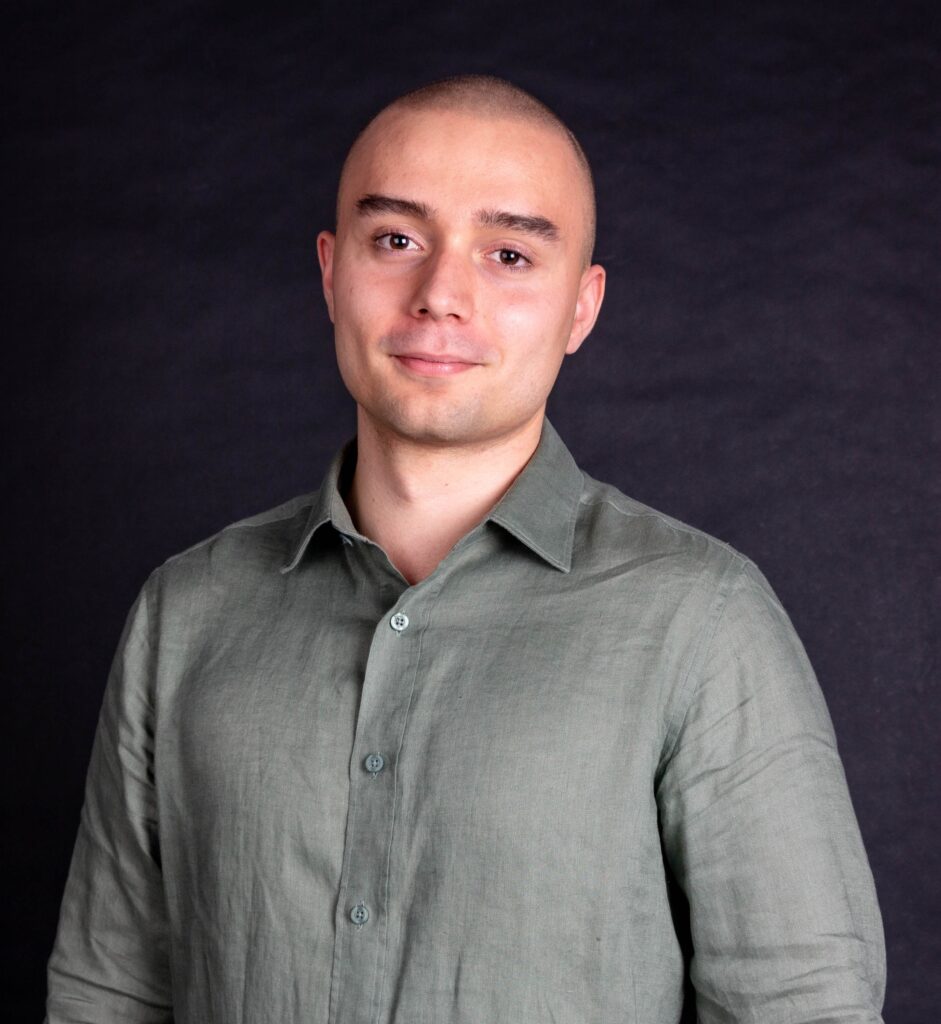
Stanisław Adamczyk, PhD Candidate
Centre for Brain Research, Jagiellonian University
Doctoral School in Social Sciences, Jagiellonian University
When approached with caution, electroencephalography (EEG) offers unique insights into the neural correlates of perception, attention, and emotion. It gathers information up to one thousand times per second, allowing us to observe brain dynamics that are too brief to be captured by other methods.
However, special care should be taken when interpreting EEG results. This method has limitations in pinpointing the exact location of the measured activity and is highly susceptible to confounds caused by among others, muscles. Moreover, we often measure only correlates of cognitive processes – sometimes poorly understood – rather than the processes themselves. Keeping these limitations in mind is essential to avoid drawing overly confident conclusions.
During my workshop, I will address these topics in an approachable way to help you gain an initial understanding of EEG. I will also connect this introduction to examples from social neuroscience, giving you ideas on how to incorporate EEG into your own research. We will cover topics such as signal preprocessing, event-related potentials, spectral analysis, connectivity analysis, source localization, and statistical evaluation of EEG data.
The workshop will include both lecture and practical exercises, allowing you to experience some of the challenges involved in working with brain signals firsthand. Finally, the last part of the workshop will be dedicated entirely to your questions about EEG and its potential applications in your research.